Search and buy domains from Namecheap
Showing posts with label Topic. Show all posts
0

Polymorphism

Polymorphism is a feature of OOP that allows one interface to be used for a general class of actions. The specific action is determined by the exact nature of the situation. By dint of polymorphism, it is possible to design a generic interface to a group of related activities. This helps reduce complexity by allowing the same interface to be used to specify a general class of action. It is the compiler’s job to select the specific action as it applies to each situation.

The programmer does not need to make the selection manually. He needs only remember and utilize the general interface. In this way, polymorphism promotes extensibility.


0

Features of object-oriented programming over the procedure-oriented and Java as platform independence

Java makes platform independence possible by translating a program into bytecode instead of machine code. Bytecode is a highly optimized set of instructions designed to be executed by the Java run-time system or JVM (Java Virtual Machine). Translating a Java program into bytecode makes it much easier to run a program in a wide variety of environments because only the JVM needs to be implemented for each platform. Once the run-time package exists for a given system, any Java program can run on it.

Although the details of the JVM will differ from platform to platform, all understand the same Java bytecode. If a Java program were compiled to native code, then different versions of the same program would have to exist for each type of CPU. Thus, the execution of bytecode by the JVM is the easiest way to create truly portable programs.


0

There are three principles of OOP short definations

Encapsulation
Inheritance
Polymorphism

Encapsulation is the mechanism that binds together code and the data it manipulates and keeps both safe from outside interference and misuse. 
Inheritance is the process by which one object acquires the properties of another object. By use of inheritance, an object would need only to define those qualities that make it unique within its class. It can inherit its general attributes from its parent. Thus, it is the inheritance mechanism that makes it possible for one object to be a specific instance of a more general case.
Polymorphism is a feature that allows one interface to be used for a general class of actions. The specific action is determined by the exact nature of the situation.


0

A History of Computer Programming Languages


A History of Computer Programming Languages

1. The High-Level Dawning
In the 1940s computer programs were cryptic and lengthy streams of low-level machine instructions. That changed in 1955 and through the 60s with the advent of Fortran, good for scientific calculations, and then Cobol for commercial data processing. These languages gave early programmers their first glimpse of the expressive power of abstracting away underlying details and using higher-level constructs to describe their needs.
2. The C Era
Around 1972 the C language was born and has probably had more impact on programming and language design than any other language to date. Many subsequent languages derived their syntax (appearance) from C and there are also a number of C dialects (such as C++ in 1980) which collectively still dominate the list of most popular programming languages today. With C one can create high-performing and low-memory-using applications so it's often used for writing other languages, operating systems, and small device controllers.
3. The Age of Java
In 1995 the Java language hit the scene, rapidly rose to popularity and is widely considered the most popular programming language in existence today. I put its success down to three reasons. Firstly, it was based on the C/C++ syntax so it was familiar looking. Secondly, it omitted a number of its predecessor's more complex language features greatly simplifying the language (although at the price of performance) but thus opening it up to a wider audience of programmers. And lastly due to the web.
Netscape Navigator, the first web browser, entered the market around the same time and allowed embedding of Java programs into web pages to extend their functionality and the two rode the tech boom together. A few years later Java made its way into the enterprise market (some say basically replacing COBOL) and the rest is history.
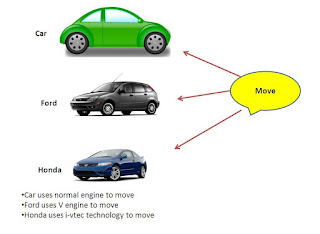
The historical perspective above is one way to look at it, but there are a few others. So now I'm going to slice languages across some other dimensions currently in play:



0

Storage Area Network

Storage Area Network


SAN, called Storage Area Network or Network behind servers, is specialized, high-speed network attaching servers and storage devices. A SAN allows "any to any" connection across the network, using interconnect elements such as routers, gateways, hubs and switches. It eliminates the traditional dedicated connection between a server and storage, and concept that the server effectively "owns and manages" the storage devices. It also eliminates any restriction to the amount of data that a server can access, currently limited by the number of storage devices, which can be attached to the individual server. Instead, a SAN introduces the flexibility of networking to enable one server or many heterogeneous servers to share a common storage "utility", which may comprise many storage devices, including disk, tape, and optical storage. And, the storage utility may be located far from the servers which use it.  


Social Time

Facebook
Like Us
Youtube
Follow Us
Twitter
Follow Us
Pinterest
Follow Us

Subscribe to our newsletter

(Get fresh updates in your inbox. Unsubscribe at anytime)